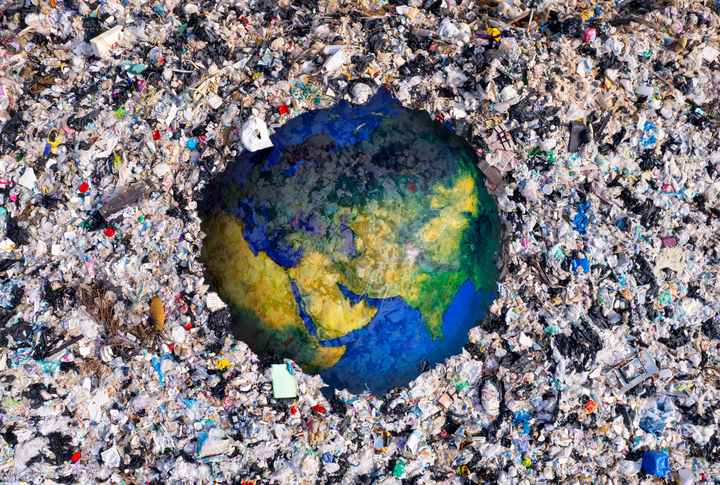
As a human race, we generate over two billion metric tons of municipal solid waste (MSW) every year. This is according to the United Nations Environment Programme (UNEP), which also estimated that household food wasted amounted to 631 million metric tons in 2022.
UNEP describes a triple planetary crisis that comes from waste: climate change, biodiversity loss, and pollution – all of which degrade human and planet health.
Relocating or traveling abroad inherently creates an environmental impact, but once we arrive we can minimize our mark – to varying degrees depending on where we live. Municipalities and whole countries manage waste in vastly different ways.
According to world waste statistics by OECD country, Japan, South Korea, Estonia, and Germany top the list of countries that are best managing waste. Israel, Chile, and the United States rank among the worst.
Cities around Japan, Taiwan, and elsewhere have removed public trash bins and thereby – perhaps counterintuitively – reduced litter. They have also developed wider waste management systems that reduce harmful emissions and environmental damage.
For example, for more than a decade South Korea has focused on managing food waste. A mandatory recycling program requires separate disposal of food waste, using receptacles with weight sensors that impose a charge per kilogram. Collection sites then transfer the waste on to be used as organic matter, food for animals, or compost.
These ‘Pay As You Throw’ fees (PAYT) schemes are employed in many other locations, including Belgium, Canada, Finland, France, Ireland, Italy, Japan, Norway, Taiwan, and thousands of cities around the U.S. Special disposal bags or stickers may be required in these places.
What else can a newcomer do? In addition to adhering to the best local practices, new residents and travelers can:
-Shop selectively to avoid overbuying that results in waste.
-Choose thoughtful packaging that minimizes trash.
-Consider food co-ops or bulk purchases that you can share with other households.
-Consolidate shipments when ordering online to reduce packaging and fuel demands.
-Investigate second-hand options for your needs, and think about reselling, donating, or swapping things you no longer use.
Living Abroad provides sustainability information for more than 100 destinations, including country goals and policies, local waste and recycling, and other aspects that help newcomers live responsibly while abroad. Also find global sustainability resources in our Reference Pro section.
Other resources:
Developmentaid.org
Information related to international development and humanitarian assistance.
C40 Cities Climate Leadership Group: Knowledge Hub
Resources from a global network of mayors driving the future of city climate action.
ReFED.org
U.S. based nonprofit focused on stopping food waste.
Waste-to-Energy Association (WTEA) Trade organization representing waste-to-energy companies and communities.
Written by Ellen Harris, GMS, Product Manager, Content Group